
Creating our AI figurines gave us hours of entertainment. Here’s what it taught us about AI.
If we told you this article was written using ChatGPT, would you be able to tell? And if it was, would it make a difference to how readable it would be, how you’d engage with it, and the value you’d take from it?
We think it would.
The onward march of AI in our daily lives continues, and it feels like nothing can slow it down. There are mixed feelings about this progression, of course. Some people are declaring outright war on it (“The robots will kill us all!”) while others are ready to give their entire lives over to it (and in some extreme cases, fall in love with it and propose to it).
We sit somewhere in the middle.
On the one hand, AI is incredibly useful in helping us do what we do better. Depending on the task, it can help us organise thoughts, edit, curate idea starters, scan for holes and errors and do calculations that would otherwise be extremely laborious to do ourselves. With such a nifty assistant permanently on call in a browser tab, it’s no wonder so many people are using generative AI almost daily. Not to mention the fact that most software and app uses AI in some form already anyway.
But then there’s the other side of it. No matter how advanced AI seems to get, there’s still no substitute for creativity, judgment and that gut instinct that makes us…well, human. After all, when it comes to AI generated content, it feels like there’s something crucial missing: that quality of human resonance that’s hard to define. Being able to write a piece of content that connects with another human is, in our minds, what makes it successful – and from a brand and business perspective, it’s what improves those crucial engagement metrics.
Besides this missing “X factor”, there are times when generative AI just gets it plain wrong. We recently participated in the AI figurine trend to create figurines of The Principality team, which gave us endless laughs and much entertainment. At the same time, it really hit home for us the value of a real human designer who knows us and our personalities – and who lives in the actual world!
In many cases it simply missed the mark of what we look like. Here’s X:
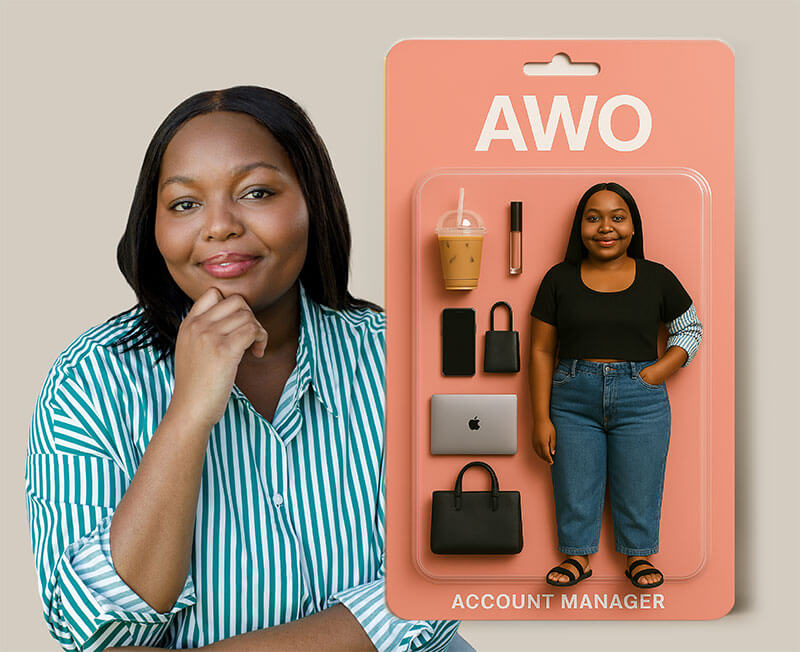

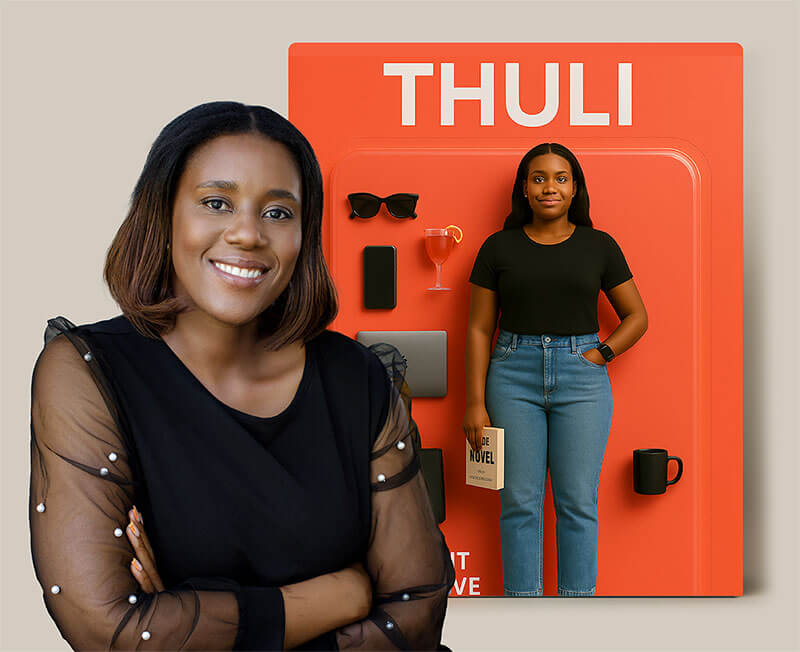
What’s perhaps the most interesting part about this exercise was that the more we prompted ChatGPT, the more it got it wrong. Analysis paralysis, perhaps?
It seems we’re not the only ones experiencing AI mishaps, including big brands. This article gives the example of McDonalds testing AI-powered voice recognition in its drive-thrus. While the system understood customer orders, it often misunderstood requests and in some cases completely mixed up customisations.
Although AI isn’t quite there yet in terms of being mistake-proof, it’s likely that it will improve in this area as the years go on. But what about us humans? A new MIT study has found that ChatGPT may be eroding critical thinking skills. The study asked three groups of people to write an essay: one group relied on ChatGPT, one group relied on search engines and one group had no outside resources at all. The study found that the group who relied on ChatGPT had the weakest brain connectivity and remembered the least about their essays. Overall, the study brings up a potential major concern: are we setting ourselves up for broad cognitive decline across society the more we rely on AI for our daily tasks?
Another important point is that AI is trained by humans and our incredible brains, and the dataset it uses is information that’s been produced by our brains too. But what happens once we stop using our brains and rely solely on AI? AI won’t be getting any smarter – and we’ll be relying on something that has no real intelligence.
The bottom line? AI is only as smart as the people who build it and train it. So when we stop thinking for ourselves and just rely on AI, it’s inevitable that the quality of the information it produces will decline. It’s humans that make AI useful – so it’s important that we keep being human as AI evolves. What does that mean? It means using our innate intelligence, creativity and capacity for original thought in order to continue generating work that’s meaningful and high quality.
We’re by no means advocating for not using AI at all. Rather, we think it should be used in a way that’s balanced and puts it in the proper perspective – we’re the master, and it is our servant.
By the way, we wrote this article (ChatGPT didn’t get used once). Could you tell?
